Why would two nearly identical ranch homes in Mesa Verde, both listed the same week and both under contract by the second showing weekend, close a full month apart?
The answer isn't the buyers, the lenders, or even the inspectors. It's what's holding the roof up. A meaningful share of Mesa Verde's most desirable ranch homes were built on a post-and-beam structural system rather than the standard wood stick-frame you'll find across most of Costa Mesa's other 1960s tracts. That distinction is exactly why the neighborhood commands a premium, and exactly why that premium comes wrapped in a longer, more specialized path to closing than a comparable ranch home a mile away.
The System Under the Slab
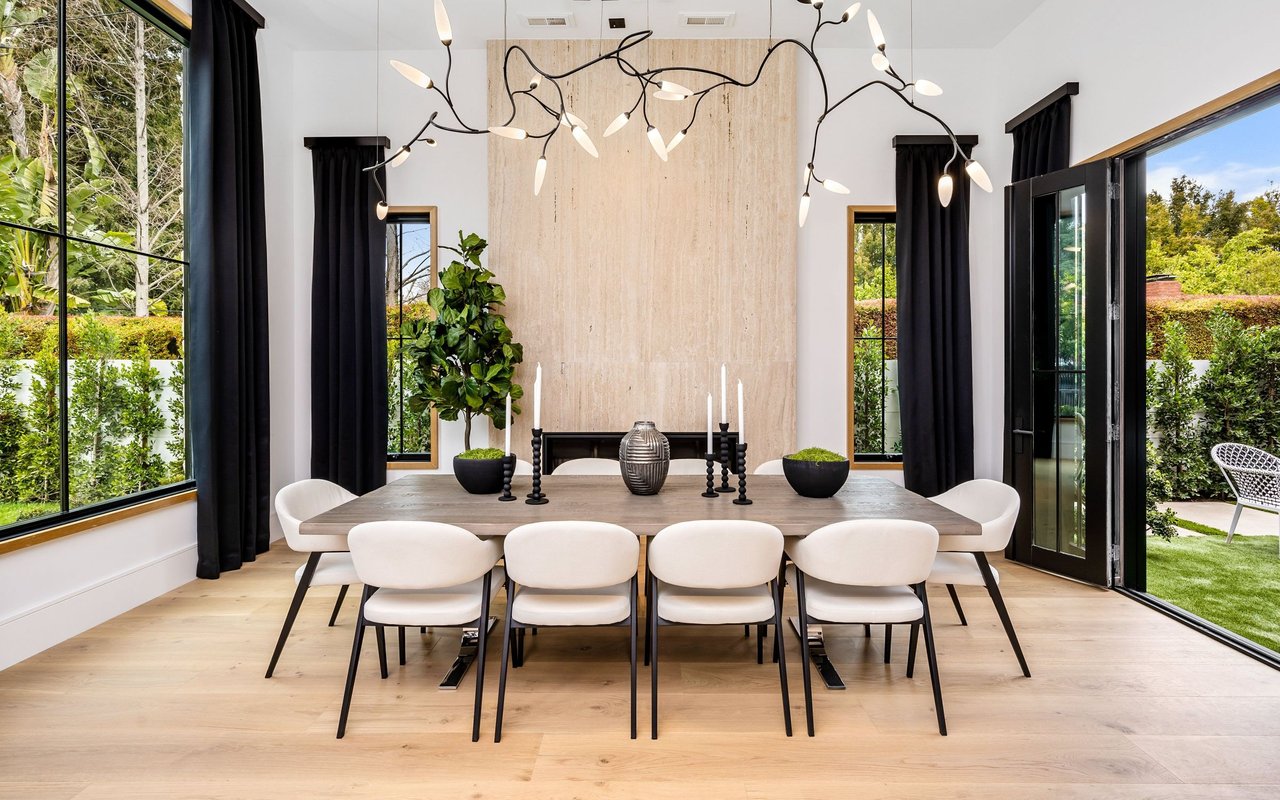
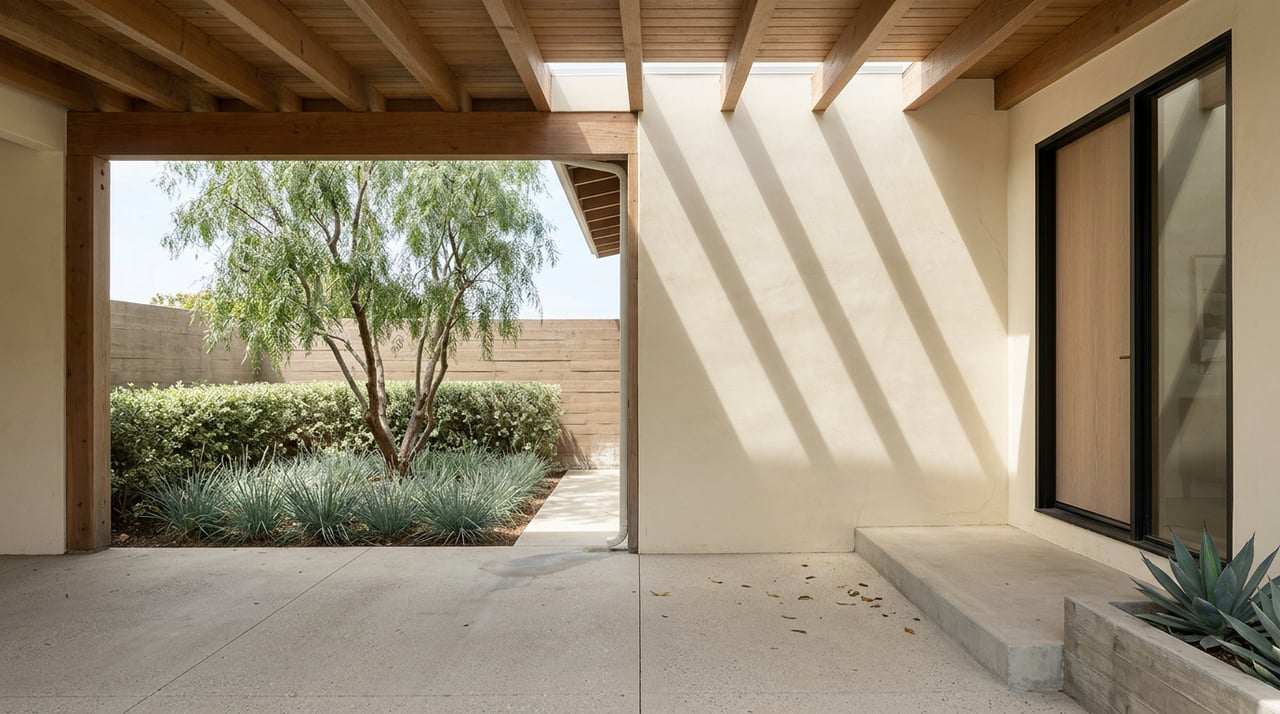
Post-and-beam construction carries the load through vertical posts and horizontal beams instead of a dense network of load-bearing stud walls. That's what gives these homes their signature look: open interiors, walls of glass, exposed wood members doing double duty as structure and design. Most examples date to the mid-20th century, and Mesa Verde has a real concentration of them, a legacy of the neighborhood's transformation from agricultural land starting in the 1960s, with the Mesa Verde Country Club anchoring the community as early as 1959.
Drive through the Bird Streets, named for Tanager, Bunting, Pelican, and other species, or the State Streets a few blocks over, and you're looking at a different structural language than what you'd find in a typical Orange County postwar tract. Most of Mesa Verde, along with Costa Mesa's central neighborhoods and South Coast, was built out between 1955 and 1975, the same general era as the rest of the city's mid-century tracts. What sets Mesa Verde apart is the concentration of homes built on this specific structural system within that era, distinctive enough that buyer's guides now treat post-and-beam as its own category of home search rather than folding it into the broader "mid-century ranch" label.
That's the setup. The premium exists because the architecture is genuinely different. What follows from that difference is what most buyers and sellers underestimate.
What 2026 Buyers Are Actually Paying For
As of mid-2026, Mesa Verde home prices typically range from roughly $1.2 million to $3 million or more, with a median sitting around $1.6 million to $1.7 million. The top of that range, the Bird Streets and the custom homes closest to the golf course, command the highest premiums in the neighborhood.
What's driving that isn't just nostalgia for mid-century design. One local read on the neighborhood describes the current demand pattern as "Ranch Modernization," the push to take generous single-story lots and open them into indoor-outdoor living. Buyers are specifically seeking out Mesa Verde's 8,000-square-foot-plus parcels to do exactly that, and the post-and-beam homes on those lots are often the ones best suited to it because the structure was designed from the start to blur the line between inside and out.
Mesa Verde isn't one market. It's a handful of distinct pockets, each with its own character and its own relationship to that premium:
| Character | What Shapes the Value | |
|---|---|---|
| Bird Streets | Mid-century loops named for birds | Highest concentration of post-and-beam stock, top-of-range pricing |
| State Streets | Named after U.S. states, generous lots | Room to expand around an already-open structural frame |
| Balearic Park (The Circles) | One of Mesa Verde's named sub-pockets | Shares the neighborhood's broader post-and-beam concentration |
| Estates & Customs | Larger custom homes near the Country Club | Golf-course adjacency, the largest lots in the neighborhood |
A buyer comparing list prices across these pockets without accounting for which ones sit on post-and-beam frames is comparing two different products that happen to look similar from the street.
Why Lenders Pause on the Wall They Can't See
Here's the friction that doesn't show up on a comps sheet. Post-and-beam is a less common structural system in residential lending, and that unfamiliarity has consequences. Lenders and appraisers can flag unusual construction or extensive unpermitted work during underwriting, which matters most for buyers using FHA or VA financing, since both carry minimum property standards that a conventional stick-frame appraisal template doesn't always anticipate cleanly.
None of this means a post-and-beam home in Mesa Verde won't finance. It means the loan path needs to be confirmed early, before the buyer falls in love with a specific address, not after the appraisal comes back with questions the underwriter can't resolve on the spot.
This is the first thread in why two similar-looking Mesa Verde ranches close on different timelines. One buyer arrives with a loan officer who already knows the structural system. The other finds out mid-escrow.
The Specialist List a Standard Inspection Doesn't Cover
A general home inspector can walk a post-and-beam ranch the same way they'd walk any other 1960s home, but a thorough due-diligence process on one of these properties typically extends past that single visit. Beyond the general inspection, the recommended roster looks more like this:
- A structural engineer to evaluate the post-and-beam frame itself, particularly if any past owner reconfigured a wall
- A wood-destroying organism (WDO) inspector, since termite and moisture-related wood damage are real risks in this climate and can influence negotiations directly
- A roofing specialist and a window specialist, given the low-pitched rooflines and large glazed openings common to the style
- An HVAC contractor, for reasons that go beyond comfort
Architectural authenticity itself becomes part of the calculation here too. Preserved materials and sympathetic updates can add value among buyers who recognize genuine midcentury quality, while deferred maintenance and looming big-ticket items like roofing, windows, or electrical work cut the other way for buyers who want something truly move-in ready. Comparable sales in Mesa Verde need to be sourced with that distinction in mind, not just matched on square footage.
The Duct Question No One Asks Until Escrow
Here's the piece that's genuinely specific to this neighborhood. Local HVAC contractor Flex Mechanical notes that Costa Mesa's mid-century housing stock, particularly the ranch-style homes in Mesa Verde and the older tracts near Harbor Boulevard, often still has original asbestos-wrapped ductwork. It isn't automatically dangerous if left undisturbed, but it requires careful handling the moment any HVAC service or replacement work begins. A visual inspection can suggest the risk is there. It can't confirm or rule it out. That requires testing.
For a buyer planning to update the HVAC system right after closing, which is a common move on a home that's otherwise been beautifully modernized, this is exactly the kind of finding that surfaces after the inspection contingency has already closed if nobody asked the question up front.
The premium buys the architecture. It doesn't waive the due diligence the architecture requires.
Permit History Is the Other Half of the Appraisal Flag
Costa Mesa has a heavy remodel culture generally, and unpermitted work from past additions or reconfigurations is a frequent issue in the city's older tract homes. That matters twice in Mesa Verde: once for the disclosure obligations that come with any 1960s home sale, and again because unpermitted work sits right next to unusual construction on the list of things that can give an appraiser pause.
The city's Building Safety Division runs permit history and submittals through an online portal, with some smaller projects eligible for what the city calls "insta-permits" and larger scope work requiring full plan review. Before listing a Mesa Verde post-and-beam home, or before writing an offer on one, pulling that permit history isn't a formality. It's the fastest way to know whether a wall that was opened for a "Ranch Modernization" project was engineered and signed off, or just opened.
A Short FAQ
Does post-and-beam construction actually stop a loan from closing? No, but it can slow one down if the lender isn't looped in early. Confirming the loan path before writing an offer, especially for FHA or VA buyers, is the single best way to avoid a mid-escrow surprise.
How long should I plan for inspections on a Mesa Verde ranch home? Longer than a standard tract-home timeline. A general inspection alone typically covers the basics, but a post-and-beam home with any history of modification usually needs a structural engineer, a WDO inspector, and often HVAC-specific testing layered on top.
Is unpermitted work always a dealbreaker? Not always, but it needs to be identified and priced into the negotiation rather than discovered late. Buyers and sellers who know the permit history going in tend to have smoother, faster closings than those who find out from an appraiser.
Mesa Verde's post-and-beam homes earn their premium honestly. The architecture is real, the lots are generous, and the demand behind the "Ranch Modernization" trend isn't going anywhere. But a premium built on a less common structural system comes with a checklist that a standard Orange County ranch sale doesn't require, and the buyers and sellers who plan for that checklist from day one are the ones who close on schedule.
If you're weighing a post-and-beam purchase in the Bird Streets or preparing one of Mesa Verde's classic ranches for market, Cadence Real Estate can walk the permit history, line up the right specialists, and price the home for what its structure actually delivers. Let's Get Started.