A house on Governor St went into escrow this summer with no accessory dwelling unit standing on the lot. No framing, no foundation, no finished casita out back. What the seller had was a stamped set of city-approved ADU plans, and the property closed $110,000 over its asking price anyway.
That sale tells you something the median price in Eastside Costa Mesa does not: buyers here have stopped waiting for a finished structure before they pay for one. Over the three months ending May 2026, Eastside Costa Mesa's median sale price sat at $2.1 million, up 3.1 percent year over year, with homes averaging 35 days on market and price per square foot climbing nearly 15 percent. Those numbers describe a competitive neighborhood. They don't explain why an unbuilt ADU can move a price by six figures. For that, you have to look at what changed in how these units get financed and appraised, and at what Eastside's own lot geometry does to the size of that bet.
Four Sales, One Pattern
A June 2026 roundup of Costa Mesa's live ADU comps laid out four properties side by side, and the pattern holds once you line them up:
- Governor St: no ADU built, approved plans only. Sold $110,000 over asking.
- Mendoza Dr: newly built, permitted detached ADU completed in 2026. Went under contract in 7 days.
- 19th St, Eastside Costa Mesa: a 5-bedroom, 4-bath, 2,578-square-foot main house on an 8,100-square-foot lot, with a fully detached 938-square-foot, 2-bedroom, 2-bath ADU built in 2025 and designed by local firm Abode Design + Build. Listed as high as $3,095,000, it took 90 days to close and settled at $2,915,000.
- Mesa Del Mar: a 4-bedroom, 3-bath, 2,014-square-foot home on a T-shaped lot, with a 499-square-foot detached ADU built in 2026 under full city permit and its own separate electric meter. Sold in 7 days at $2,325,000, working out to $1,154 per square foot on the main home.
Read as a set, the fast movers share one trait: permitted status, documented and verifiable. The slow mover, 19th St, was also permitted and beautifully built by a named local design-build firm, yet it still needed three months to find a buyer. The difference wasn't the paperwork. It was the price tier. At $2.9 million and up, the buyer pool for an Eastside dual-residence property narrows to people who want that specific configuration at that specific number, and narrower pools take longer to clear no matter how clean the permit file is.
Put those two facts together and the mechanism comes into focus. Permit status is what makes an ADU count as value at all. Price tier is what determines how fast that value gets absorbed.
Why the Financing Rules Just Changed
The reason permit status suddenly carries this much weight traces back to a national underwriting update, not a local one. The weekend of March 21, 2026, Fannie Mae rolled out an updated Desktop Underwriter that lets qualifying buyers count a portion of ADU rental income toward their qualifying income, something that used to be far harder to document and use. The rule applies to purchases and limited cash-out refinances on one-unit primary residences, lenders typically credit around 75 percent of documented market rent, and the total ADU income a buyer can use is capped at 30 percent of their qualifying income.
That cap matters in practice. A buyer earning $10,000 a month can't suddenly borrow against unlimited rental upside just because a property has a casita out back. But for a buyer sitting close to the edge of qualifying for an Eastside price point, a permitted, income-producing ADU can be the difference between approval and a smaller loan. Multiply that across a competitive market and you get exactly what showed up in the Governor St and Mendoza Dr sales: buyers moving fast and paying up for anything that clears the permit bar, because the permit is what unlocks the financing.
What Happens Without a Permit
The other side of this rule is less forgiving. Fannie Mae's own selling guide requires appraisers to comment on any addition that lacks the required permit and to assess its impact on market value. In practice, that usually means an unpermitted structure gets little or no additional value in the appraisal, and some lenders treat it as a liability rather than a neutral non-factor. A backyard unit with a kitchen and a separate entrance but no permit history isn't an ADU to an underwriter. It's square footage the appraiser has to explain away.
For an Eastside seller, that's the real stakes of the permit question. A structure built without permits doesn't just fail to add the premium these comps show. It can actively complicate financing for a buyer who needs a loan, which shrinks your buyer pool before you've even gotten to negotiate.
Why Eastside Carries the Biggest Version of This Bet
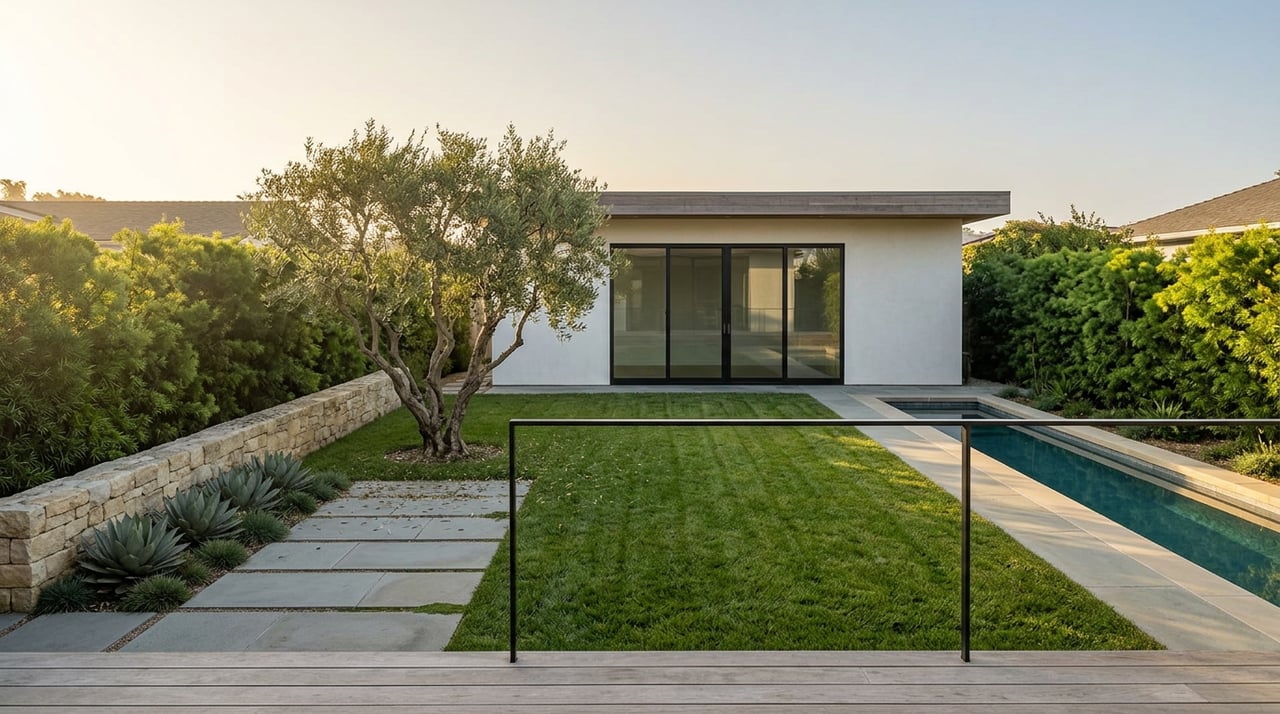
This dynamic plays out differently across Costa Mesa because lot geometry differs by neighborhood. Eastside's deepest parcels, many of them running along and behind 17th Street, are large enough to support a genuinely sized detached ADU rather than a converted garage or a junior unit carved out of existing square footage. That's why the 19th St comp could support a 938-square-foot, two-bedroom detached unit with its own patio, the kind of unit that reads as a real second residence rather than a bonus room.
It also means Eastside sellers are working with the highest ceiling and the highest execution risk in the same transaction. A detached ADU sized for one of these lots typically runs $245,000 to $440,000 or more to build as of 2026, depending on size and finish. Add in Eastside-specific plumbing before you break ground: Mesa Water District, not the city, handles the water connection and meters a new ADU separately from the main house, and while local sewer service runs through the Costa Mesa Sanitary District, treatment capacity is billed through OC San, whose capacity charge applies to any new detached unit. None of that shows up on a listing photo, but all of it shows up in the timeline and the budget for a seller trying to get a unit permit-ready before putting a home on the market.
What Buyers Are Actually Paying For
This is where the Governor St sale earns a second look. The buyer who paid $110,000 over asking for approved plans and no structure wasn't buying a finished asset. They were buying entitlement, the zoning approval and city sign-off that removes the biggest source of delay and risk from building an ADU later, plus the ability to eventually use that unit's rental income toward financing under the new Fannie Mae guidelines. They still owe the full construction budget on top of that premium. What they bought was optionality with a paper trail, not plywood.
That distinction matters for anyone weighing whether to build before listing or sell the entitlement and let the buyer finish the job. A completed, permitted, moderately priced ADU like the one at Mesa Del Mar moves fast because it removes both the entitlement risk and the construction risk at once. An approved-plans-only property moves fast and commands a premium because it removes the entitlement risk while leaving the construction upside to the next owner. What doesn't move well, based on this comp set, is a finished ADU at a price point narrow enough to require the exact right buyer, regardless of how clean the permit file is.
Before You Price an ADU Into a Listing
- Confirm the ADU's permit status with the city before assuming it adds value. An as-built without closed permits is treated as square footage, not as an ADU, in most appraisals.
- If the unit is rented, have a lease and documented market rent ready. That paperwork is what an appraiser or underwriter needs to apply the income approach under the new Fannie Mae guidelines.
- Get written confirmation of utility setup early. Mesa Water District meter sizing and any OC San capacity charge can affect both your budget and your closing timeline if they're not resolved in advance.
- Price relative to your buyer pool, not just your comps. A $2.9 million dual-residence property and a $2.3 million one draw very different numbers of qualified buyers, even with comparable ADUs.
A Short FAQ
Does an approved-but-unbuilt ADU permit add value the same way a finished unit does? Based on this comp set, yes, and sometimes more, because the buyer is pricing in future flexibility along with the entitlement itself. It does not replace the construction cost, which the buyer still has to fund separately.
If my ADU was built without permits, is it worth legalizing before I list? The Fannie Mae guide requires appraisers to flag unpermitted work and its effect on value, which typically means little or no credit for the space. Getting it permitted before listing removes that uncertainty for any financed buyer.
Does the new Fannie Mae rule mean unlimited ADU rental income counts toward a loan? No. Lenders generally credit around 75 percent of documented market rent, and the total ADU income used is capped at 30 percent of the borrower's qualifying income, so it helps at the margin rather than removing income requirements altogether.
If you're weighing whether to permit, build, or sell an Eastside property with ADU potential, the details above change the math more than most listings let on. Cadence Real Estate works through that math property by property, from permit status to construction budget to who your actual buyer pool will be at a given price. Let's Get Started.